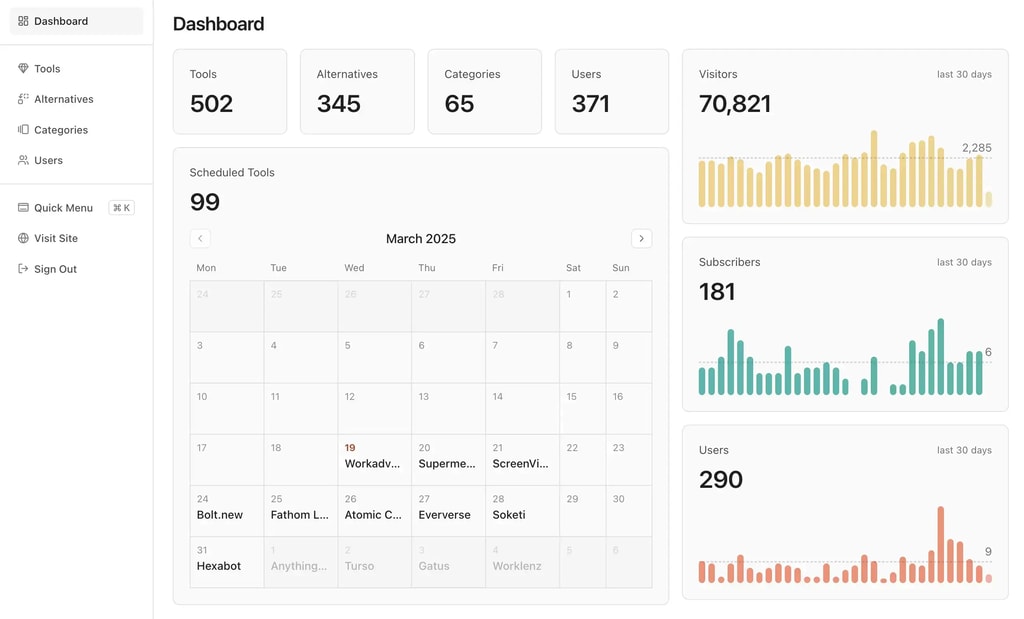
Website directories are curated online platforms that organize businesses, services, and resources into browsable categories — think of them as the modern evolution of the phone book. For businesses, they're a practical tool for increasing visibility, strengthening SEO, and building credibility.
- Information Hub: Directories link users directly to relevant sites, acting as a central discovery platform.
- SEO Boost: Being listed in directories improves search engine visibility and drives organic traffic.
- Credibility and Trust: Appearing in reputable directories signals legitimacy to both users and search engines.
This guide breaks down how web directories work, the different types available, and how to use them effectively in your digital strategy.
Understanding Website Directories
Website directories are structured catalogs that organize sites into categories and subcategories. Unlike search engines that rely on algorithms, directories are curated by human editors who manually review and categorize each submission — resulting in higher-quality, more relevant listings.
Directories range from broad (covering many industries) to niche-specific (focused on a particular sector or region). This specialization helps users find exactly what they need without wading through irrelevant results.
- Human Curation: Editors review and categorize each website manually.
- Organized Structure: Sites are listed in clear, browsable categories.
- Quality Assurance: Editorial oversight maintains high listing standards.
- Flexible Focus: Directories can be broad or hyper-specialized to serve different audiences.
Web Directories Vs. Search Engines
Web directories and search engines solve the same problem — finding information online — but they take fundamentally different approaches.
Search engines use automated algorithms to crawl and index billions of pages. The result is comprehensive but noisy: results can include irrelevant or low-quality sites. Directories, by contrast, rely on human editors who curate and categorize a smaller, higher-quality collection of sites.
This makes directories particularly valuable for niche markets and specialized topics, where quality matters more than quantity.
- Curation Method: Directories use human editors; search engines use algorithms.
- Organization: Directories categorize sites; search engines index them in a vast database.
- Quality Control: Directories provide editorial oversight; search engines don't.
- Scope: Directories are focused and specialized; search engines are broad and comprehensive.
Types of Web Directories
Web directories come in several forms, each serving different audiences and use cases:
-
General Directories: Cover a wide range of topics and industries. Best for broad visibility across multiple sectors.
-
Niche Directories: Focus on specific industries or subjects, providing highly targeted and relevant listings. These tend to deliver better engagement because the audience is already qualified.
-
Business Directories: List businesses with reviews, contact details, and comparison features. Think Yelp or Clutch.
-
Article Directories: Host articles on various topics, often with author bios and backlinks. Useful for content marketing and link-building strategies.
-
Local Directories: Concentrate on businesses within a specific geographic area. Essential for local SEO and connecting with nearby customers.
Directories also differ in their submission models. Free directories accept listings at no cost, paid directories charge a fee, reciprocal directories require a backlink in exchange, and non-reciprocal directories have no such requirement. Choosing the right type depends on your audience, budget, and goals.

How Web Directories Operate
Web directories function like organized digital libraries. Website owners submit their sites — either for free or for a fee — and human editors review each submission against the directory's quality standards before publishing it.
The review process checks whether a site fits the directory's categories and whether its content is accurate and relevant. Only sites that meet these criteria get listed.
- Categorization: Sites are grouped by topic and subcategory.
- Human Review: Editors verify quality and relevance before approval.
- Quality Listings: Only vetted, reliable sites make the cut.
This editorial process is what makes directories trustworthy. Users can browse with confidence, knowing the listings have been reviewed by real people rather than sorted by algorithms alone.
Directory Listings for Businesses
For businesses, directory listings are one of the most cost-effective ways to increase online visibility. Being listed in relevant directories makes it easier for potential customers to discover your business — especially local customers searching for nearby services.
Beyond discoverability, directory listings build credibility. When your business appears in reputable directories, it signals trust and legitimacy. Customers feel more confident engaging with a business they can find on well-known platforms.
- Increased Visibility: Listings make your business more discoverable and give you an edge over unlisted competitors.
- Local Attraction: Local directories connect you directly with nearby customers actively seeking services.
- Credibility Boost: Appearing in trusted directories adds authority to your brand.
- Promotional Opportunities: Many directories let you promote deals, coupons, or special offers alongside your listing.
Benefits of Local Directory Listings
For businesses that serve a local area, local directory listings are particularly valuable.
Targeted reach is the primary benefit. Local directories connect you with customers who are geographically close and actively looking for services in your area — making them far more likely to convert.
Local SEO improves significantly with consistent directory listings. When your name, address, and phone number (NAP) appear consistently across local directories, search engines verify your business's legitimacy and rank you higher in local results.
Brand awareness grows as your business appears across community platforms. Repeated visibility builds familiarity and trust with local customers.
Cost-effectiveness makes local directories accessible to businesses of any size. Many offer free or low-cost listings, delivering marketing value without a significant investment.
- Targeted Reach: Connect with nearby customers actively seeking your services.
- Boost Local SEO: Consistent NAP data improves local search rankings.
- Brand Awareness: Stay visible and top-of-mind in your community.
- Cost-Effective: Free or low-cost listings deliver outsized marketing value.
SEO Impact of Directory Listings
Directory listings directly impact SEO performance in three key ways.
Quality backlinks from reputable directories signal authority to search engines. The more authoritative the directory, the more valuable the backlink — leading to better rankings and more organic traffic.
Local SEO improves when your NAP information appears consistently across directories. Search engines use this data to verify your business's existence and location, boosting your visibility in local search results.
Additional entry points emerge with each directory listing. Every listing creates another pathway for users to discover your business, increasing overall traffic and brand recognition.
- Quality Backlinks: Strengthen domain authority and improve search rankings.
- Local SEO Boost: Consistent NAP details reinforce local search presence.
- Increased Visibility: Multiple entry points drive discovery and traffic growth.
Optimizing Directory Listings
Getting the most from directory listings requires attention to detail and ongoing maintenance.
Start with complete, accurate profiles. Ensure your NAP information is consistent across every directory — inconsistencies confuse search engines and erode trust.
Use keywords strategically in your descriptions. Think about what potential customers would search for and incorporate those terms naturally.
Add high-quality images to make your listing stand out. Clear, relevant photos grab attention and give users a better sense of your offering.
Encourage customer reviews. Reviews add social proof and directly influence potential customers' decisions. Ask satisfied customers to leave feedback on your listings.
Update regularly. Refresh descriptions, add new images, and correct outdated contact information to keep listings aligned with current SEO best practices.
- Complete Profiles: Accurate, consistent details across all directories.
- Keyword Strategy: Natural integration of relevant search terms.
- Quality Images: Clear, professional photos that represent your business.
- Customer Reviews: Active feedback management and encouragement.
- Regular Updates: Ongoing maintenance to stay current and optimized.
Creating Your Own Web Directory
Building your own web directory starts with choosing a niche. Conduct market research to identify gaps in existing directories and define a specific audience. A well-defined niche helps you stand out and attract genuinely interested users.
Next, find an available domain and set up your platform. WordPress with directory-specific plugins is a popular choice, though modern frameworks like Next.js offer more flexibility and better performance. Choose reliable hosting that can handle your expected traffic.
Customization differentiates your directory from the competition. Use themes, plugins, or custom code to add features like custom listing fields, taxonomies, search filters, and user submission forms.
Here’s a step-by-step guide to kickstart your web directory:
- Choose a Niche: Identify a target audience through market research.
- Set Up a Platform: Use WordPress with directory-specific plugins.
- Pick a Host: Select hosting based on size and traffic needs.
- Customize: Use themes and plugins to enhance functionality.
- Add Features: Implement custom fields and search capabilities for usability.
Follow these steps and your directory will be well-positioned to serve your chosen niche effectively.
Monetizing a Directory Website
A directory website offers several proven revenue streams.
Charging for listings is the most common approach. Structure pricing into tiers — standard and premium — giving businesses different levels of exposure based on what they pay.
Selling advertising space lets businesses promote themselves directly to your audience. This generates income while helping advertisers reach a targeted, relevant user base. Platforms like Revinel handle the selling, scheduling, and tracking of those ad spots for you.
Membership or subscription models create recurring revenue. Charge users for access to premium features like advanced search, exclusive deals, or early access to new listings.
Featured listings command a premium. Businesses pay extra for prominent placement on your site, boosting their visibility above standard entries.
- Listing Fees: Tiered pricing for standard and premium placements.
- Advertising: Sell ad space to reach your directory's audience.
- Subscriptions: Recurring revenue from premium feature access.
- Featured Spots: Charge for prominent positioning.
Combining these strategies diversifies your income and keeps the platform financially sustainable.

Benefits of Web Directories
Web directories strengthen your online presence by organizing information into structured, browsable categories. This makes it far easier for users to find relevant content compared to sifting through raw search results.
Human editors review and approve every listing, ensuring only reliable, relevant sites make the cut. This curation produces higher-quality results than automated systems — users can trust what they find.
Reputable directories also deliver strong SEO benefits. Quality backlinks from trusted directories signal authority to search engines, improving your rankings and driving targeted traffic. Visitors from directories tend to be looking for specific services, making them more likely to engage.
- Structured Information: Browsable categories streamline navigation.
- Quality Control: Human editors ensure accuracy and relevance.
- SEO Benefits: Authoritative backlinks and targeted traffic.
- Credibility Boost: Association with established directories builds trust.
Appearing in well-known directories signals legitimacy and strengthens your brand's reputation.
Challenges of Using Web Directories
Web directories face real challenges worth understanding.
Declining relevance is the biggest. Search engines dominate how people find information, and broad, unfocused directories attract less traffic than they once did.
Quality varies widely. Not all directories maintain high standards, and a mix of strong and weak listings undermines credibility — making it harder to stand out.
Submissions take time. Each directory has its own process and requirements, and managing multiple submissions demands patience. Some directories deliver little return on the effort.
SEO risks exist. Over-relying on directory links can backfire when search engines penalize sites associated with low-quality directories. A balanced link-building strategy is essential.
Ongoing maintenance is unavoidable. Business details change, and outdated listings frustrate users. Regular updates keep your information accurate and relevant.
- Declining Relevance: Broad directories lose traffic to search engines.
- Quality Concerns: Mixed listing quality hurts credibility.
- Time-Consuming: Each submission process takes effort.
- SEO Penalties: Low-quality directory links carry risk.
- Maintenance Needs: Regular updates keep information accurate.
Weighing these challenges against the benefits helps you make informed decisions about which directories deserve your time.
Website Directories
Website directories remain valuable tools for businesses looking to grow their online presence. They organize information into browsable categories, helping users find what they need quickly and efficiently.
The SEO benefits are significant. Quality backlinks from trusted directories improve search rankings, increase visibility, and drive targeted traffic. Appearing in a directory also signals credibility, building trust with both users and search engines.
For local businesses, directories are especially powerful. They strengthen local SEO, connect you with nearby customers, and create a visible community presence that attracts ready-to-buy visitors.
Directory listings do require ongoing maintenance — regular updates keep information accurate and relevant. But the payoff in visibility, traffic, and credibility makes the effort worthwhile.
Whether you're listing your business or building your own directory, understanding how web directories work gives you a meaningful edge in your digital strategy.