A directory website is a site that collects listings (businesses, software tools, jobs, services) and organizes them into categories that people can browse, search, and filter. Yelp is a directory of local businesses. Every job board you've ever used is a directory. So is every "best tools for X" site with a search bar.
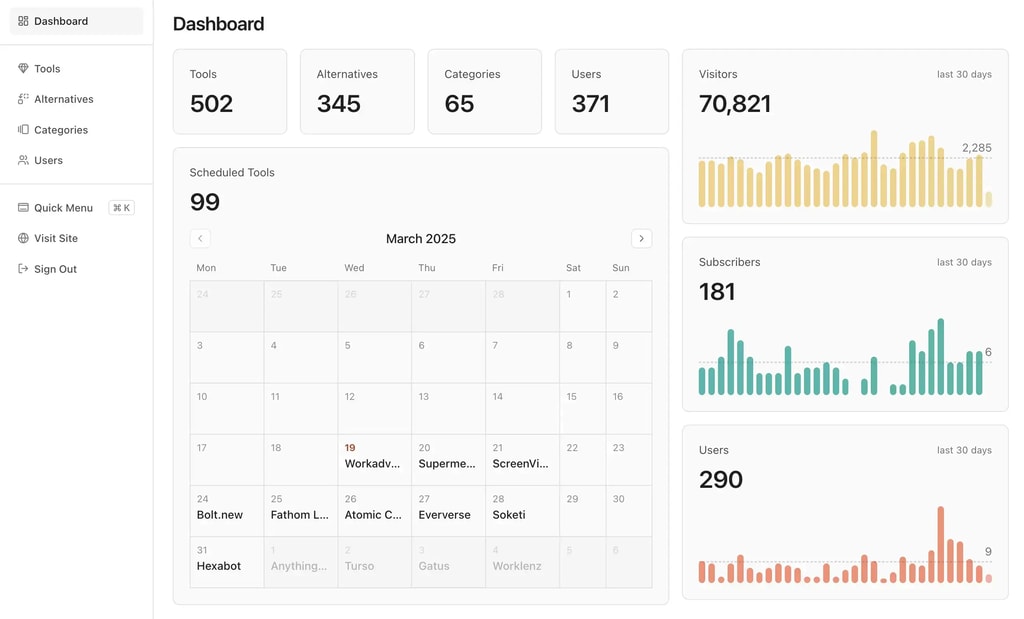
I run one myself. OpenAlternative, my directory of open source software, gets around 70,000 visitors a month and makes about $6,500/month. I also sell Dirstarter, a boilerplate for building directories. So when I answer "what is a directory website", I'm describing the business I'm actually in, not summarizing a Wikipedia entry.
This guide covers how directories work, the main types with real examples, why businesses pay to be listed, and how directory owners make money.
What Is a Directory Website? The Short Answer
A directory website is an organized, searchable database of listings around a specific topic or location. Each listing is a structured profile: name, description, category, contact details, pricing, reviews, whatever fields matter for that niche.
The phone book was a directory. So was the original Yahoo, which started as a human-curated catalog of the web. The format never died, it just specialized.
Here's the key difference from a search engine: search engines index everything, directories curate something specific. Google gives you ten blue links and an AI summary for any query. A directory gives you a complete, structured, comparable view of one narrow space: every wedding photographer in Austin, every open source CRM, every remote design job posted this week.
That curation is the entire value proposition. People don't visit a directory to search the whole internet. They visit because someone already did the filtering for them.
A directory has three participants, and understanding them explains everything else in this guide:
- Visitors want to find and compare options quickly.
- Listed businesses want to be found by those visitors.
- The owner sits in the middle and charges for the connection.
How Directory Websites Work
Under the hood, every directory follows the same basic loop, whether it's a two-person side project or Yelp with more than 300 million cumulative reviews.

Listings get added. Either the owner seeds them manually (that's how most directories start, and how I launched OpenAlternative), businesses submit themselves through a form, or data comes in via scraping and APIs. Most mature directories use a mix of all three.
Listings get reviewed. This is the curation step, and it's what separates a directory from a database dump. Someone (or increasingly, something) checks that submissions are real, relevant, and placed in the right category. Directories that skip this step turn into spam farms fast.
Listings get organized. Categories, tags, locations, and filters turn a pile of entries into something browsable. This structure is also why directories perform so well in search: every category and every listing becomes its own keyword-targeted page.
Visitors find listings. Mostly through Google. Directories are SEO machines because they generate hundreds or thousands of pages that match exactly what people search for ("best invoicing software", "plumbers in Denver"). Increasingly, AI assistants pull from them too.
Money changes hands. Businesses pay for placement, visitors click ads or affiliate links, or users pay for access. More on this below.
That's it. The model is simple, which is exactly why it has survived every platform shift since the 1990s.
The Main Types of Directory Websites
Directories come in a few recognizable flavors, and most successful ones fit one of these five patterns. If you want to see more live examples, I keep a list of directory website examples that breaks down how each one makes money.
Local Directories
The classic. Local directories list businesses in a geographic area: restaurants, dentists, contractors, gyms. Yelp is the obvious example, but thousands of profitable small directories serve single cities or regions.
Local directories live off local search intent. Someone typing "emergency electrician near me" has their wallet out, which is why local listings and the leads they generate are worth real money to businesses.
Niche and B2B Directories
These go deep on an industry instead of a location. Clutch is a good example: it lists agencies and B2B service providers, ranks them by category, and verifies client reviews before publishing them.
Niche directories tend to be the best opportunity for solo founders. The audience is qualified, competition is thinner, and businesses pay premium rates to reach exactly their buyers. I've written a whole post on profitable directory niche ideas if you're hunting for one.
Review Sites
Review platforms are directories where the reviews are the main product. G2 does this for business software: the listings matter, but people come for the user reviews that help them compare options before buying.
The line between "directory" and "review site" is blurry on purpose. Reviews are user-generated content that makes a directory more useful, more trusted, and much harder to copy.
Job Boards
A job board is a directory where the listings expire. We Work Remotely lists remote jobs across tech, marketing, and support, and companies pay to post.
That expiration is a feature, not a bug: it forces repeat purchases. A plumber lists once and forgets about it. A company that's hiring comes back every single time they have a new role to fill.
Software and Tool Directories
These list apps, SaaS products, AI tools, or open source projects. This is my corner of the market. OpenAlternative lists open source alternatives to popular software, and I've documented exactly how it grew in my OpenAlternative case study.
Software directories monetize beautifully because the listed products have high margins and real marketing budgets. A SaaS company happily pays $197/month for a featured spot that sends them qualified trials.
Why Businesses Pay to Get Listed
A directory only works if businesses actually want to be in it. They do, for four reasons.
Visibility where buying decisions happen. Directory pages rank for high-intent searches that individual business sites struggle to win. A small agency will never outrank Clutch for "top development agencies", but their listing on that page puts them in the conversation.
Backlinks and SEO value. A listing in a reputable, relevant directory is a legitimate backlink. For local businesses, consistent name, address, and phone data across directories also feeds local search rankings. (Low-quality directory links can hurt instead of help, which is why curation matters so much.)
Trust and social proof. According to BrightLocal's Local Consumer Review Survey, 97% of consumers read reviews for local businesses, and nearly half won't use a business with fewer than 20 of them. Directory profiles with reviews are where that trust gets built.
AI visibility. This is the new one. The same BrightLocal survey found 45% of consumers now use AI tools like ChatGPT for local recommendations, up from single digits just a year or two earlier. And where do AI models get their recommendations? Largely from structured, crawlable sources like directories. I see this firsthand: AI assistants cite OpenAlternative regularly, and that traffic converts.
Pro tip: if you ever doubt that directories still matter in 2026, ask an AI assistant for "the best X for Y" and check its sources. You'll find directory sites cited constantly.
How Directory Owners Make Money
Quick version, because I've covered this in depth in my guide to directory revenue models.

- Featured and paid listings. Businesses pay for placement, badges, or enhanced profiles. Featured listings at $197/month make up about 35% of OpenAlternative's revenue.
- Advertising and sponsorships. Selling ad slots or newsletter sponsorships to companies that want your audience. This is the other 65% of my revenue.
- Lead generation. Charging businesses per inquiry or quote request. Common in local and home services niches.
- Subscriptions. Charging visitors for premium access, or businesses for recurring placement. Job boards often charge per post instead.
- Affiliate commissions. Earning a cut when visitors buy through your links. Works well in software directories.
Most healthy directories combine two or three of these. If you're wondering what realistic numbers look like at different stages, I broke down real figures in how much directory websites make.
How to Tell a Good Directory From a Bad One
Not all directories deserve the name. The web is littered with abandoned link farms, and they're why "directory" sometimes carries a stale reputation. Here's how I judge them, both as a user and as someone deciding where to list my own products.
Good directories are curated. Listings are reviewed, categorized correctly, and rejected when they don't fit. If a directory accepts literally anything, its only product is spam.
Good directories are fresh. Check the newest listings and latest reviews. A directory where nothing has changed in six months is a museum.
Good directories have real traffic. A listing is worthless if nobody sees it. Look for ranking category pages, an active newsletter, or a community around the site.
Good directories are niche-focused. "All businesses, all categories, worldwide" is a red flag. The best directories own one specific space and go deep.
Good directories are transparent. Clear pricing, a visible owner, and honest labeling of sponsored placements. If you can't tell what's paid and what's earned, neither can Google.
Pro tip: this checklist cuts both ways. If you're building a directory, every item on it is a feature you can compete on, because most existing directories fail at least two of them.
Want to Build One Yourself?
Here's the part that gets me excited. Directories are one of the few online businesses where a solo founder still has a real edge: pick a niche big players ignore, curate better than they ever will, and monetize from month one.
I built OpenAlternative in 48 hours. It took about a year to reach meaningful revenue, but it now makes around $80k/year, mostly on autopilot. The model works, it just rewards patience and curation.
If you want to go down this path, start with these two guides:
- How to start an online directory business covers the full playbook: niche selection, validation, monetization, and growth.
- How to build a directory website covers the practical build: platforms, tools, and the technical decisions that matter.
And when you get to the build itself, that's what Dirstarter exists for. I packaged everything I learned from building Chipmunk and OpenAlternative into a Next.js boilerplate so you can launch in days instead of months. Obvious bias disclosure: it's my product, but it's also the exact stack my own directories run on. All you really need to bring is a name: find one that's available to register and you can be live in a weekend.
The Bottom Line
So, what is a directory website? It's a curated, searchable collection of listings in one niche, sitting between people who want to find something and businesses that want to be found. That middle position is valuable: businesses pay for visibility, visitors get faster decisions, and the owner collects rent on the connection.
The format outlived the phone book, outlived Yahoo, and is now getting a second life as AI assistants lean on structured, curated data. Whether you're listing your business or building the next niche directory yourself, you're working with one of the oldest and most durable models on the internet.