Content Management
Learn about the content management system and workflow in Dirstarter
Dirstarter provides a robust content management system that handles both user submissions and admin-created content. This guide explains the complete content workflow and available features.
Content Workflow
User Submissions
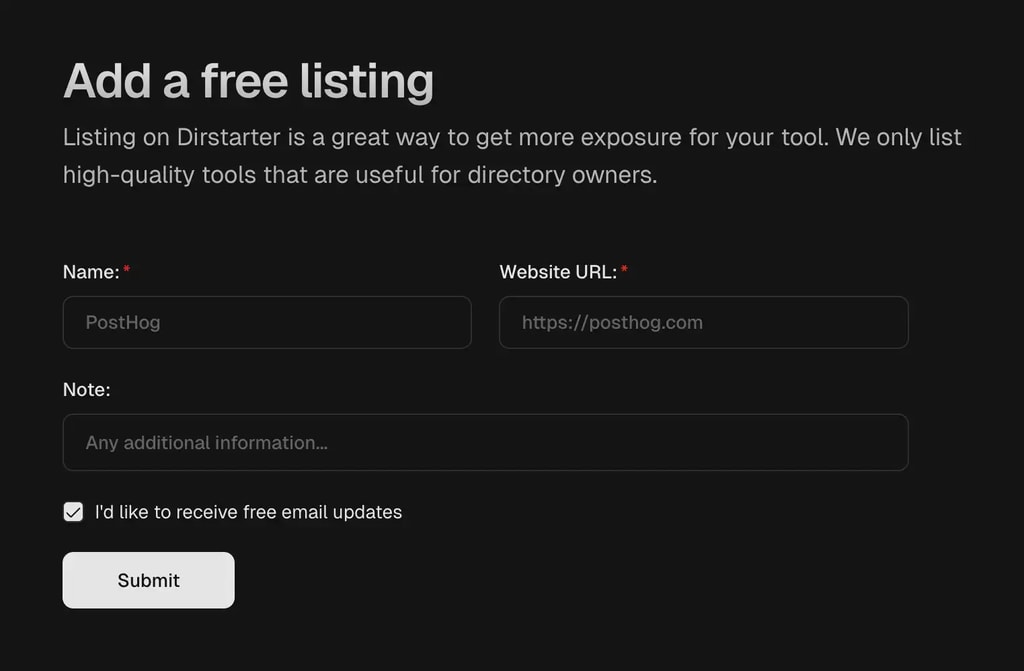
Users can submit new tools through the submission form. Each submission includes:
- Tool details (name, description, URL)
- Submitter details (name, email)
Admin Review Process
When a tool is submitted:
- It appears in the admin dashboard under "Draft"
- If marked as expedited, admins receive immediate notifications
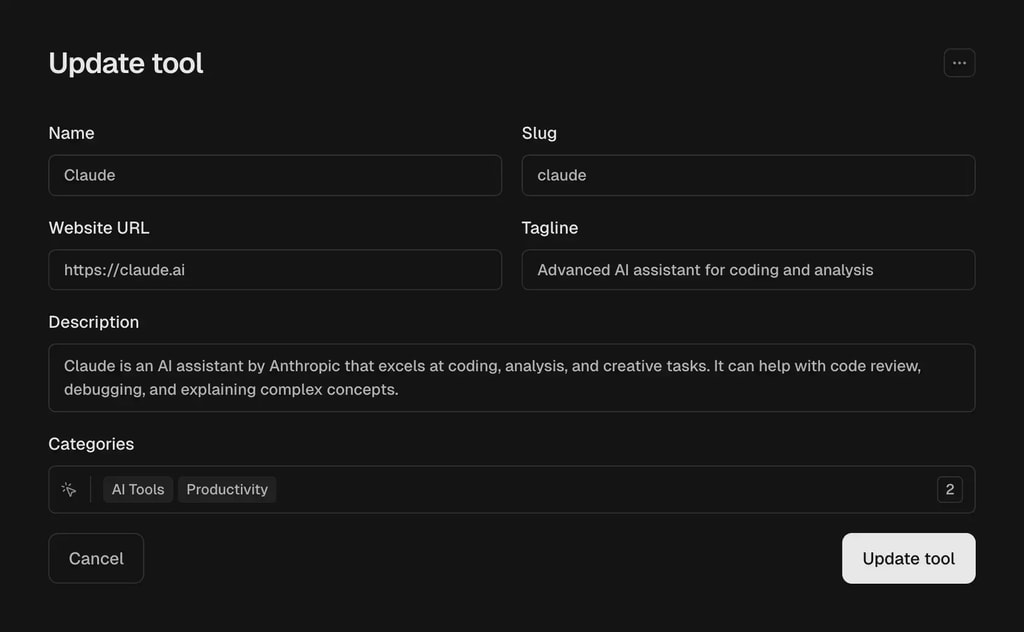
- Admins can review and accept or delete submissions
Content Scheduling
Once approved, admins can:
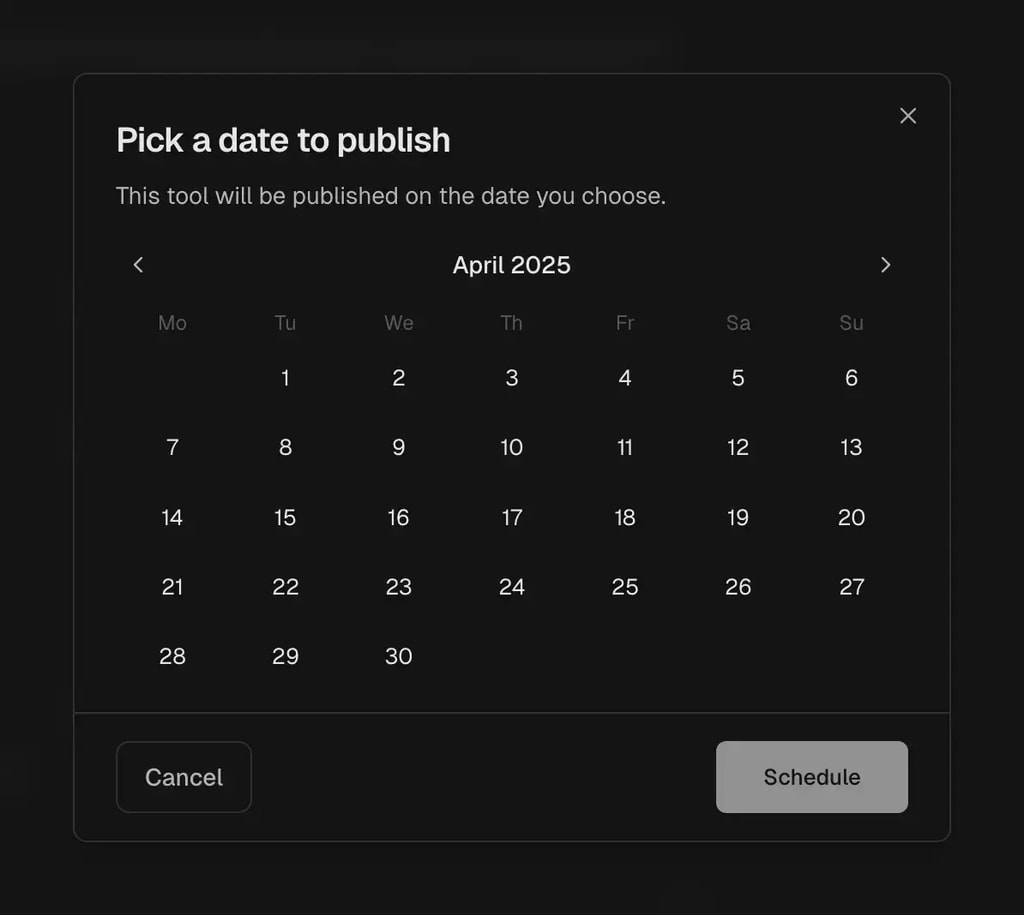
- Schedule the content for future publication
- Set publication date and time
- Add final touches to the content
- Preview how it will appear on the site
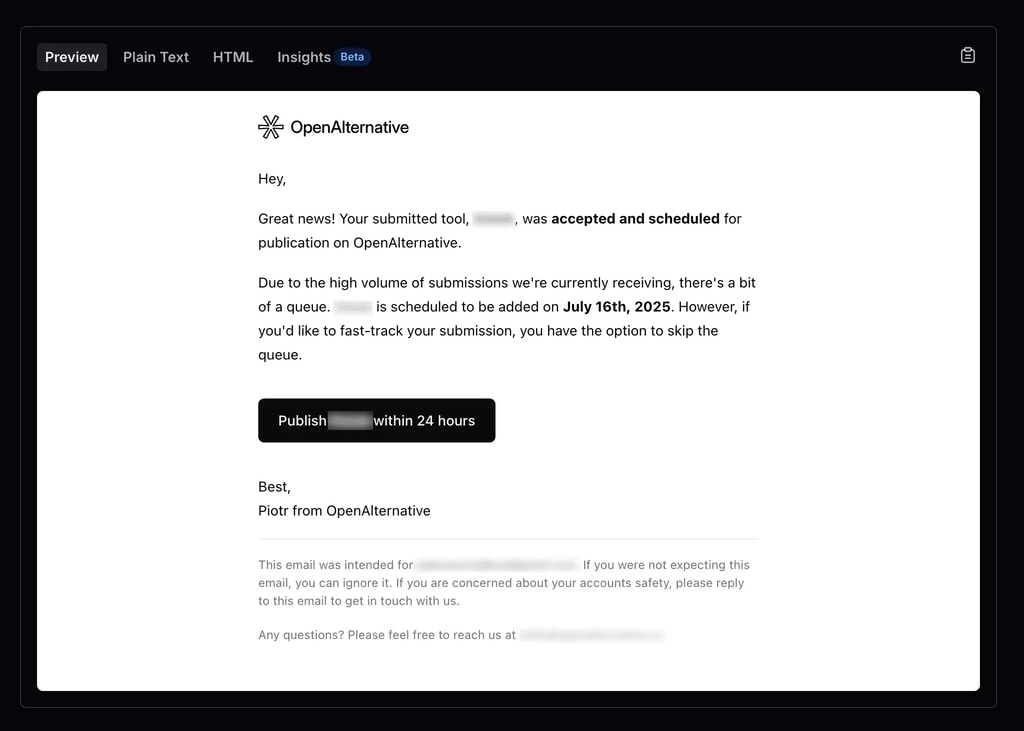
- Notify the submitter by email with a publication date and a link to skip the queue.
Automated Processing
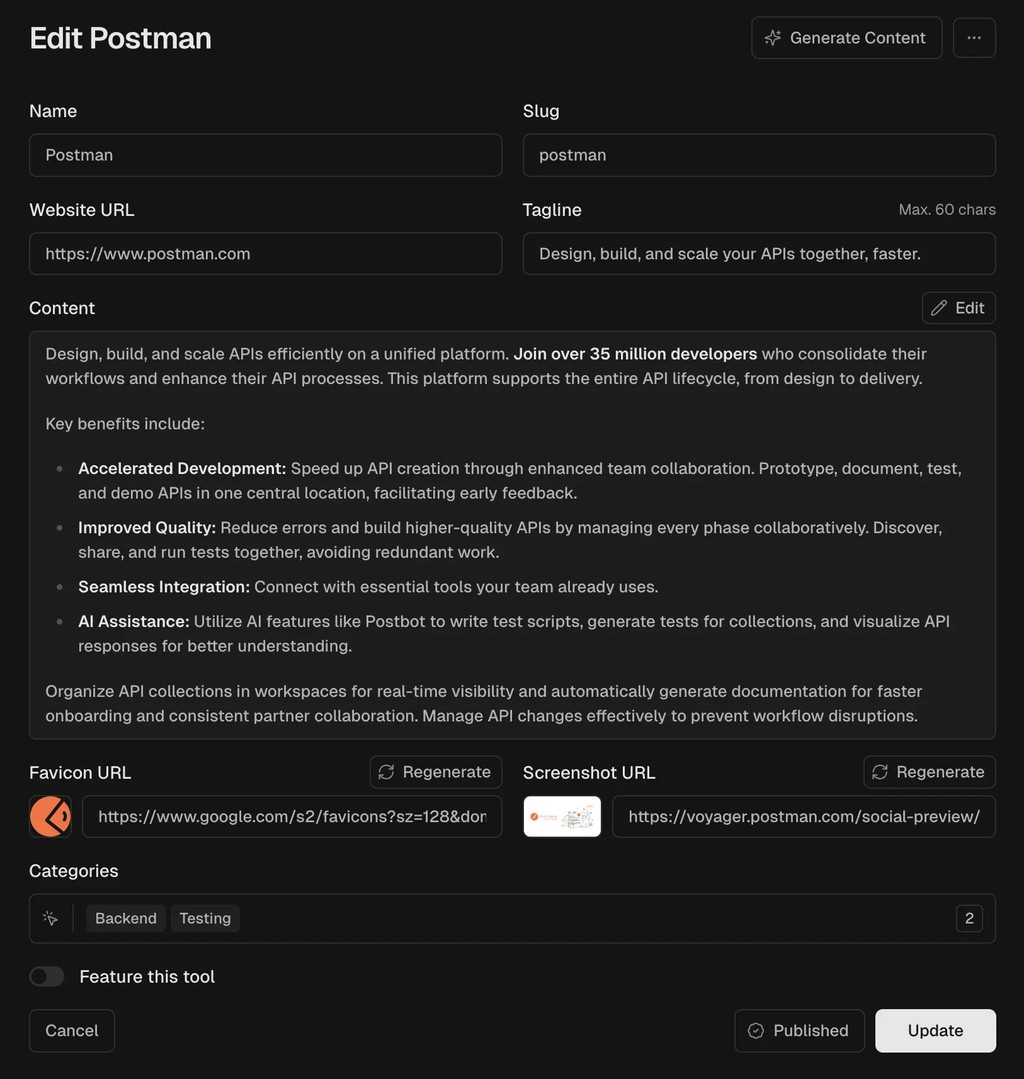
The system is capable of automatically processing submissions. Once a draft is created, you can generate a high-quality content and media for it.
- High-quality AI generated content based on the scraped content
- Screenshots generated using ScreenshotOne
- Optimized favicons via Google Favicon API
Automated Publication
At the scheduled time:
- A cron job automatically publishes the content
- Content becomes immediately visible on the site
- Sitemap is updated and cache is invalidated
- Email is sent to the submitter with a link to the published content.
Manual Content Management
Admins can also create and manage content directly through the admin panel. You can structure everything hierarchically, make certain items stand out as featured, and create clear relationships between different pieces of content.
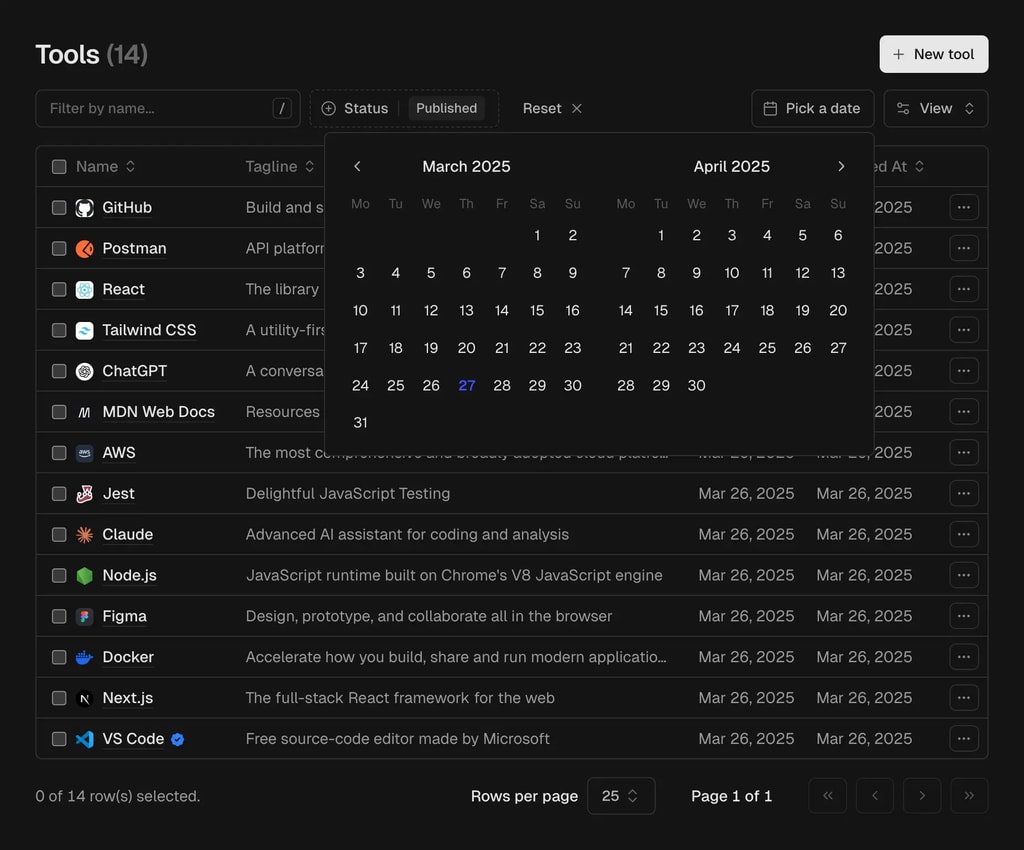
Our admin interface is packed with sophisticated data tables that make managing content feel like a walk in the park. You can filter and sort your way through content, take quick actions right from the table, and handle bulk operations without breaking a sweat. Even with tons of content, you'll stay in control with our intuitive design that makes everything just work.
Tool Statuses
Every tool has a status that determines where it shows publicly and which admin actions are available. There are four statuses.
| Status | In public listings | Public detail page | In sitemap? |
|---|---|---|---|
Draft | No | Visible (preview, noindex) | No |
Pending | No | Visible (preview, noindex) | No |
Scheduled | No | Visible (preview, noindex) | No |
Published | Yes | Visible (full page) | Yes |
Deletion is not a status. The Delete action in the admin table removes a tool and its media.
Admin actions per status
When editing a tool, the admin form shows two buttons in the bottom-right:
- A status button (left, with popover) whose label and contents depend on the current status. Clicking it opens a popover with the available transitions.
- A submit button (right, "Update" / "Save Draft") that saves field edits without changing the status.
The transitions exposed by each status's popover:
| Source status | Trigger label | Popover options (target status) |
|---|---|---|
Pending | Review | Publish now → Published / Schedule for later → Scheduled |
Draft | Publish | Publish now → Published / Schedule for later → Scheduled |
Scheduled | Scheduled | Revert to draft → Draft / Schedule for later → Scheduled (reschedule) / Publish now → Published |
Published | Published | Unpublish → Draft / Published (no-op) |
Notify submitter
When transitioning into Published or Scheduled, the popover shows a "Notify submitter via email" checkbox (default checked). Each transition sends a different email template. Uncheck the box to transition silently.
Mental model
Draft     ──▶ Published
          ──▶ Scheduled

Pending   ──▶ Published
          ──▶ Scheduled

Scheduled ──▶ Draft (unschedule)
          ──▶ Scheduled (reschedule)
          ──▶ Published

Published ──▶ Draft (unpublish)
A few notes worth holding onto:
- Deletion is not a status transition. It happens through the Delete action in the admin table, per row or in bulk, and removes the tool and its media.
- Every state has a path back to
Draft, so admins can always recover a tool to a clean editing state. - Resubmitting an existing tool's URL via the public submission form updates the existing row's submitter details instead of creating a duplicate.
Last updated on