A niche job board is one of the most underrated directory businesses you can start in 2026. The playbook is simple: pick an industry where employers already pay to hire, seed the board by curating public job postings, build traffic through SEO and a newsletter, then charge employers $99-299 per post. The software to run it costs anywhere from $0 to $399/month depending on the route you take, and I'll break down all three options below.
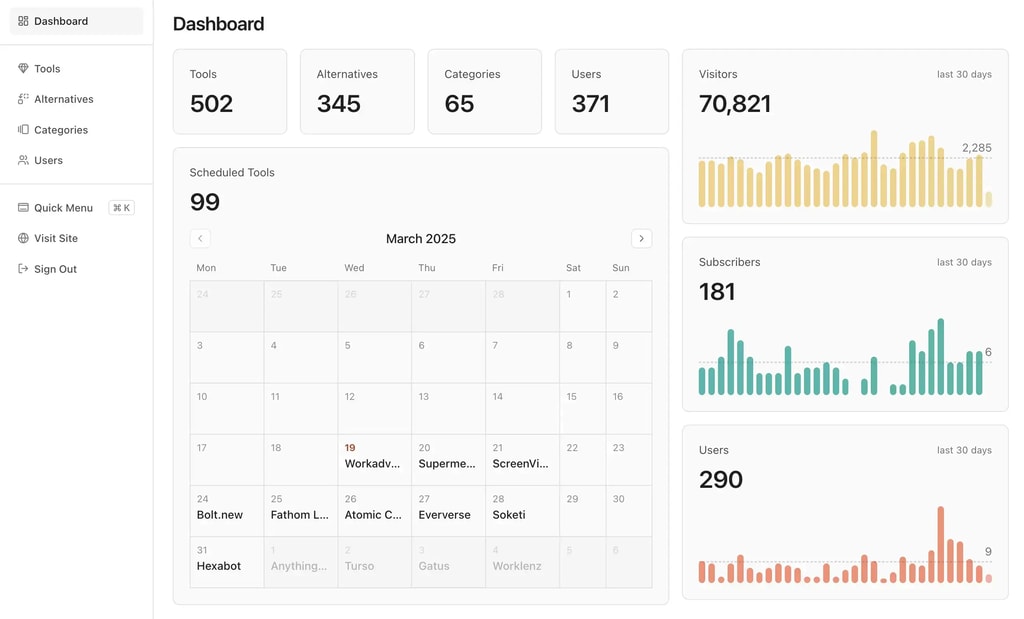
I've spent the last few years running directories. OpenAlternative makes me around $6,500/month, and before that I built Chipmunk, a WordPress directory theme. A job board is just a directory where the listings are jobs instead of products or businesses. Same mechanics, same monetization, same growth loops. If you understand how to start an online directory business, you already understand 80% of this.
The other 20% is what this post covers.
Why a Niche Job Board Beats a General One
Let me kill the bad idea first: do not build a general job board. LinkedIn and Indeed own that market. They have millions of listings, billion-dollar ad budgets, and aggregation pipelines you will never out-engineer as a solo founder.
But here's the thing about giant aggregators: they're wide, not deep. Search Indeed for a senior role in a specific niche and you'll wade through expired posts, spam, and irrelevant listings from staffing agencies. The experience is a commodity.
Niche boards win on the two things aggregators can't do:
- Curation. A human who knows the industry picks which jobs deserve to be listed. Every listing is relevant, current, and real. That alone is a product.
- Community. Job seekers in a niche read the same newsletters, hang out in the same Slack groups, and trust the same brands. A niche board can become part of that ecosystem. Indeed can't.
This is exactly why niche directories beat general ones in every category, not just jobs. The economics favor depth: an employer trying to hire a specialized role will happily pay $200 to reach 5,000 qualified people instead of paying Indeed for clicks from 500,000 unqualified ones.
Picking a Niche Where Employers Actually Pay
The single most important decision is the niche, and the test I use is blunt: do employers in this niche already spend money to hire?
Job boards are two-sided, but only one side pays. Job seekers will never pay you (and the boards that try to charge them mostly die). So your niche needs employers with real hiring budgets and real hiring pain.
Signs of a good job board niche:
- Specialized roles that are hard to fill. Nurses, welders, crypto developers, veterinary staff, bilingual engineers. Hard-to-fill means employers pay premium prices to reach candidates.
- Recruiters already operate there. If staffing agencies charge 20% of first-year salary in your niche, a $199 job post is a rounding error for an employer.
- Existing paid boards. Competition validates the market. If someone is already charging for posts, demand exists. You just need a sharper angle: narrower niche, better curation, stronger community.
- An identifiable audience. There's a conference, a subreddit, a newsletter, a certification body. If you can name where the candidates gather, you can reach them.
Run the same validation heuristics I use for any directory niche: search "[niche] jobs" and study what ranks, check if existing boards display real employer logos, and look for "who's hiring" threads in community forums. If people are manually posting jobs into a subreddit every month, that's unmet demand begging for a proper board. I keep a longer list of evaluation criteria in my profitable directory niche ideas post, and most of it maps directly to job boards.
Pro tip: niche down further than feels comfortable. "Marketing jobs" is too broad and already crowded. "Marketing jobs at climate companies" or "remote jobs for accountants" gives you a clear SEO target, an obvious audience, and a pitch employers instantly understand.
Where the Job Listings Come From
This is the part that scares most people: the chicken-and-egg problem. Employers won't pay to post on an empty board, and job seekers won't visit a board with three listings.
The answer is the same as every directory: you seed the supply side yourself.
Job postings on company career pages are public information. In the beginning, you go out and find the best open roles in your niche, write them up (or link out to the application page), and list them for free. Nobody pays you. That's fine. You're building the asset.
This phase does two things at once:
- It creates SEO surface area. Every job listing is an indexable page targeting long-tail searches. Category pages ("remote React jobs", "veterinary technician jobs in Texas") target the head terms.
- It proves the curation. When an employer eventually lands on your board, they see a living site full of relevant jobs and real traffic, not an empty shell.
Once traffic is real, you flip the model: employers can buy a direct post, which gets better placement, branding, and your distribution (newsletter, social, featured slots). The aggregated listings keep filling the long tail underneath.
How long does this take? Be honest with yourself: about a year. Eric Turner, who runs Japan Dev (more on it below), made zero revenue in year one. OpenAlternative took roughly a year to reach meaningful revenue too. Directories compound slowly, then all at once.
How Niche Job Boards Make Money
A job board is a directory, so it monetizes like one. I covered the general framework in directory revenue models, but here's how it looks specifically for job boards, with real prices from real boards.
Paid job posts
The core revenue stream. Employers pay per listing, typically for 30 days of visibility. Actual market prices in 2026:
- ProBlogger charges around $80 for a 15-day listing in the blogging and content writing niche
- We Work Remotely charges $299 for a 30-day post
- RemoteOK starts around $599 per listing, with upsells pushing well past that
For a new niche board, $99-199 per post is a realistic starting point. Once you have traffic and social proof, $199-299 is standard. Don't price at $29 to "get volume". Cheap posts attract spammy employers and signal a weak board.
Featured listings and upsells
Same playbook as featured listings on any directory (they're about 35% of OpenAlternative's revenue at $197/month). On a job board this means pinned placement at the top of the feed, highlighted styling, logo display, and newsletter inclusion. We Work Remotely lists top-of-feed placement starting at $1,999/month on its site, which tells you how much employers value position.
Employer subscriptions and bundles
Recurring revenue from companies that hire constantly: a monthly plan with unlimited or discounted posts, or prepaid bundles (5 posts for the price of 3). Agencies and high-growth companies take these deals happily because they hate re-purchasing every week.
The supporting cast
Newsletter sponsorships, display ads (a tool like Revinel lets you sell and schedule those spots directly), and affiliate links to resume tools or courses round things out. None of these carry the business alone, but stacked on top of post revenue they add up. For realistic revenue expectations across the whole directory category, I wrote up the numbers in how much directory websites make.
Two Niche Job Boards That Prove the Model
Theory is cheap, so here are two boards with public numbers.
Japan Dev: $60k+/month from one country, one industry
Japan Dev lists tech jobs in Japan for English-speaking developers. That's an absurdly specific niche, and that's the point. Founder Eric Turner started it in 2019 as a side project, curated every listing by hand, and made nothing for the first year. Three years in, it passed $60,000/month in revenue, run by a two-person team, as he detailed in interviews on Starter Story and Indie Hackers.
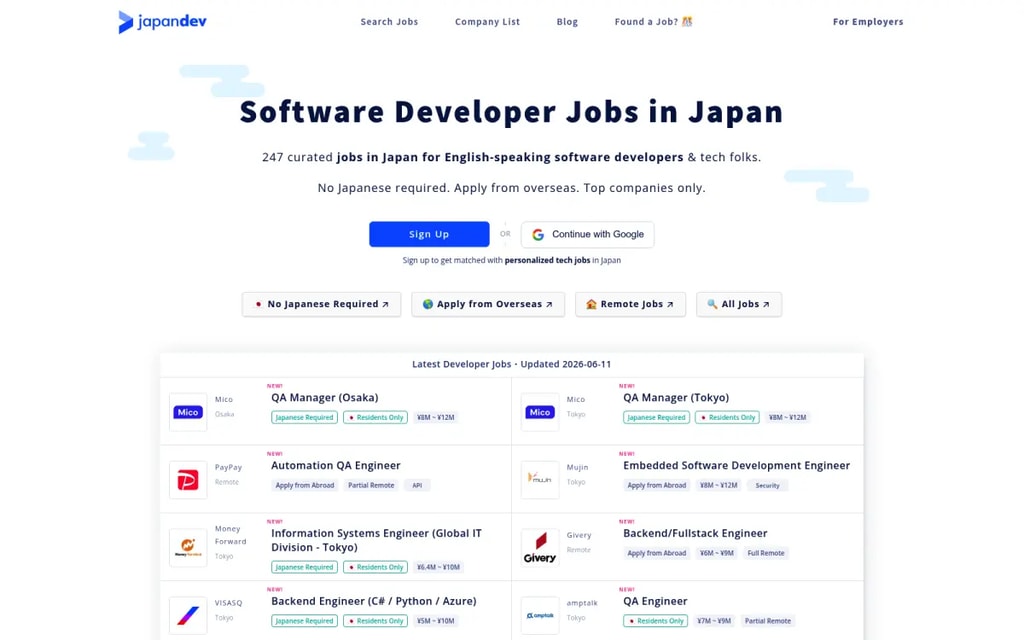
What I love about this case: the moat is pure curation. Japan Dev only lists companies it vets (no traditional Japanese corporate culture, real English-friendly environments), and that editorial standard is exactly why both candidates and employers trust it.
RemoteOK: a solo-built board doing millions
RemoteOK is Pieter Levels' remote jobs board, famously built and run solo with no employees. He operates it as an open startup with public metrics, with reported revenue around $3.4 million in 2024, all from employer listings. Remote work is a broad niche today, but he started in 2015 when it was genuinely niche, which is the lesson: early and specific beats late and general.

You don't need either of these outcomes for the business to be worth it. A board doing 20 paid posts a month at $149 is $2,980/month for a few hours a week of curation. That math works at a very human scale.
The Best Job Board Software in 2026
Now the practical question: what job board software should you actually run this on? You have three real options, and the right one depends on your budget, technical skill, and how much ownership you want. Quick disclosure before I compare anything: I build and sell Dirstarter, one of the options below, so weigh my take accordingly.
Option 1: Dedicated job board SaaS
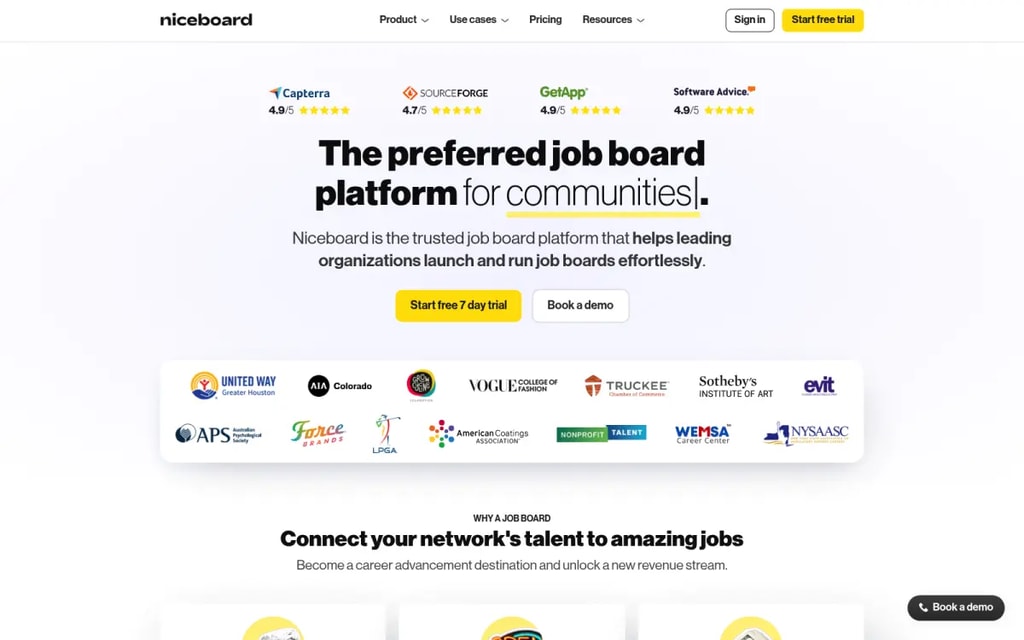
Niceboard is the most polished dedicated platform I've seen. You get hosted job board infrastructure out of the box: employer accounts, Stripe payments, job alerts, and on higher tiers a web scraper and XML import for seeding listings. Pricing starts at $399/month (or $319/month billed annually) and runs up to $899/month on the Ultimate plan.
Job Board Fire plays in the same category with similar employer-facing features. They don't publish pricing publicly, so budget for a sales conversation or a trial to find out.
The trade-off is obvious: speed versus rent. You can launch in a weekend with zero code, but $399/month is roughly $4,800/year before you've sold a single post, and you're building on land you don't own. This makes sense if you already have an audience and expect employer revenue from month one. For a slow SEO-driven build (which is most niche boards), that subscription bleeds you during the exact phase where you earn nothing.
Option 2: WordPress
WP Job Manager is a free plugin maintained by Automattic, with over 100,000 active installs listed on WordPress.org. Core listing functionality costs nothing, and paid add-ons handle applications, resumes, and paid submissions. With a decent theme you can run a legitimate job board for the cost of hosting.
The catch is the usual WordPress tax: stacking plugins for payments, SEO, and performance, then maintaining that stack forever. It works, plenty of boards run on it, but it gets creaky as you grow. I've compared the ecosystem in more depth in best WordPress directory plugins, and having built Chipmunk for WordPress myself, I say this with love: it's the budget option, not the best one.
Option 3: A directory boilerplate
This is the route I'd take, and yes, it's the one I sell. A job board is a directory of jobs, so a modern directory boilerplate like Dirstarter covers it natively: listings become jobs, categories become roles and locations, paid submissions become paid job posts, and featured placement is built in. It's a one-time purchase costing less than half a month of dedicated SaaS (see pricing), you own the code, and there are no monthly software fees while you grind through the traffic-building year.
The honest trade-off: you need to be comfortable deploying a Next.js app, or comfortable letting an AI coding agent do it for you (which in 2026 handles most of the work). If you can't stand touching code at all, use Niceboard or WordPress. If you can, owning your platform outright changes the economics of the slow early phase completely.
Start Before the Niche Gets Crowded
Here's the uncomfortable truth about every niche job board success story: the founders started years before the outcome looked obvious. Japan Dev launched to silence in 2019. RemoteOK launched in 2015 when "remote jobs" was a fringe search term.
Starting a niche job board in 2026 follows the same arc. Pick a niche where employers already pay to hire. Seed it by curating public listings. Build traffic with SEO and a newsletter for 6-12 months. Then charge $99-299 per post and stack featured listings and subscriptions on top. The job board software decision matters far less than the niche and the consistency, so pick the option that matches your skills and start this month.
If you want the full directory playbook this fits into, read how to start an online directory business. And if you want to see what I learned building one to $6,500/month, the OpenAlternative case study has all the numbers.